

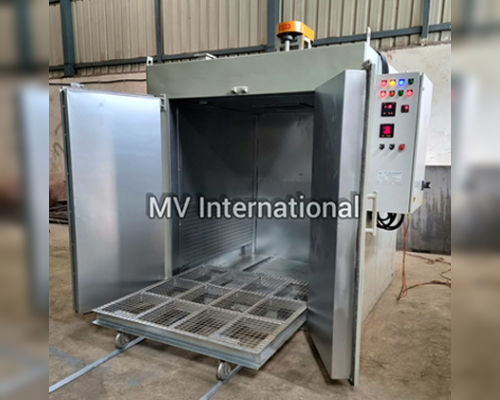
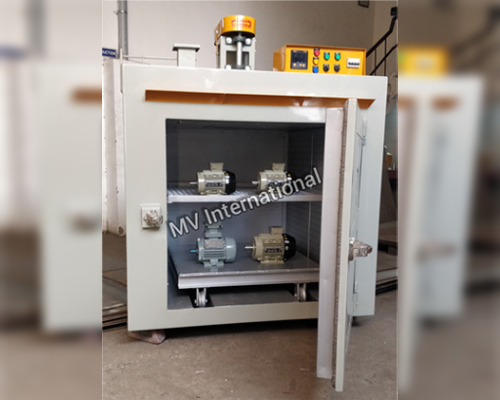
In industrial motor servicing, drying coils effectively matters. A typical motor winding baking oven operates at regulated heat to remove moisture and solvents from coil windings. Studies show proper baking can reduce insulation failures by up to 40% and improve winding life span significantly. At the heart of many maintenance protocols, this equipment stabilises winding insulation and ensures predictable performance. With decades of industrial use, the motor winding baking oven remains a core process step in motor refurbishment and preventive care across factories and service centres.
A motor winding baking oven features precise temperature control, uniform air circulation, and safety interlocks suited for electrical components. Temperature accuracy matters because too high heat can damage varnish or insulation. Typical systems allow staged temperature profiles tailored to winding materials. Construction uses durable panels, reliable heaters, and calibrated sensors. In a service environment, dependable performance reduces rework. MV International incorporates robust controls and clear displays so operators adjust setpoints with confidence. These design elements form the backbone of controlled drying and conditioning of motor windings.
Using a motor winding baking oven removes trapped moisture and solvents that can degrade insulation. Moisture within coils reduces dielectric strength and invites tracking when motors start under load. By maintaining a controlled temperature environment, the oven drives out contaminants without overheating insulation. This reduces electrical faults and keeps breakdown rates low. Workshops that apply systematic baking protocols report fewer repeat repairs. With consistent oven performance, technicians handle a broader range of motors with predictable results.
Operating a motor winding baking oven requires adherence to electrical and thermal safety standards. Units should include over‑temperature protection, grounded frames, and proper ventilation. Personnel must follow documented procedures for loading, temperature programming, and cooling phases. Inadequate safety measures can cause thermal stress or unexpected trips. MV International ensures equipment meets industry benchmarks, with parts traceability and service support. Clear procedures reduce risk and support ongoing compliance with workplace guidelines.
In practice, performance metrics include temperature uniformity, heating rate, and energy efficiency. Temperature uniformity ensures all parts of the winding reach the setpoint range. Controlled heating rates prevent thermal shock. Monitoring energy usage helps manage operating costs. These metrics affect service scheduling, maintenance intervals, and cost forecasting. A reliable motor winding baking oven delivers consistent metrics that technicians trust for planning work and allocating resources effectively.
Routine checks extend oven service life and ensure consistent output. Key tasks include:
Proper maintenance prevents temperature drift and supports operational readiness in high‑throughput environments.
If you have questions or want to discuss how this equipment fits into your workflow, reach out to us at MV International. We can talk specifics and share real industry use experiences with a motor winding baking oven.
What temperature range should a motor winding baking oven reach?
Typical ranges vary with material; many applications run between 80°C and 150°C for reliable moisture removal.
How long should motor windings stay in the baking oven?
Drying time depends on humidity and winding size; many cycles run one to four hours for effective conditioning.
Can a motor winding baking oven handle large stators?
Yes, units are sized for stators. Proper airflow and temperature control ensure even drying of larger components.
Is specialised training required to operate a motor winding baking oven?
Operators benefit from training on controls, safety protocols, and maintenance to ensure consistent, safe performance.
How often should calibration be done on motor winding baking oven sensors?
Calibration every six months or after major repairs keeps temperature readings accurate and supports quality results.
| Size of the working chamber | As per client requirement. |
| Material of construction | Mild Steel, Stainless Steel 304 / 316 or any. |
| Temperature Range | Ambient to 1500C / 2500C / 4000C / 5000C. |
| Air circulation | Vertical, Horizontal or Combination. High Volume and high Velocity Airflow provides twice the air changes compare to ordinary Industrial Ovens. |
| Timer | Digital Pre-Settable with range up to 0 to 999 Minutes / Seconds |
| Paint | Enamel Paint / Epoxy Coating / Powder Coated. |
| Power supply | 230 Volts Single Phase 50Hz / 60Hz 415 Volts 3 Phase 50Hz / 60Hz |
| Heating Elements | Low wattage Incoloy sheathed heating elements / SS Tubular |
| Insulation | Ceramic Wool / Mineral Wool |
| Door Gasket | Fibre Glass Rope (High Temp) / Silicon Gasket. |
| Heavy Duty Shelves / Trays | Made out of angles with wire knitted mesh or perforated sheet suitable for oven internal size will be provided along with the oven. |
| Exhaust Manual or Automatic | Automatic forced exhaust system with fresh air inlet. Manually adjustable damper with fresh air inlet. |
| Heating Media | Electric / Gas / Diesel / Steam / Thermic OIL etc. |
| Temperature Control | PID with or without Profile Setting (Temp Up and Down) can be provided with SSR/ SCR for high accuracy. The programming of PID can vary from 4 to 50 programmes. |
| Temperature Recorder | Microprocessor chip-based paper less, Multi-Stage Temp. Indicator cum Recorder. |
| PLC With HMI | PLC can be provided for automation and integration of whole system, data feeding, process display, and fault indication can be seen in HMI. |
| SCADA System | High quality integration and controlling system from one point can be done with SCADA. |
| Door | A. Door interlocking system will switch off the blower and the heating system if the oven doors are open
B. Doors on both ends |
| Fumes Outlet | Forced exhaust blower |
| Windows and lights | A. Viewing window B. Interior lights and Access ports for calibration C. Oven on switch- Illuminated D. Heat on switch- Illuminated |
| Timer and Alarm | A. 24/7 timer B. Audible/visual alarm indicators |
Copyright © 2026 MV International. All Rights Reserved.
