

In coated manufacturing lines, one number shapes daily output: curing temperature. Polyurethane curing ovens often operate between 120°C and 200°C, holding parts for 20 to 60 minutes. A small shift of ten degrees can change adhesion results across thousands of components in a single shift. Energy use also matters, with industrial ovens consuming up to 30% of a finishing line’s total power. These figures guide layout decisions, airflow design, and control systems. For teams working with coated metal, rubber, or composites, the oven becomes a measured environment, not a background machine.
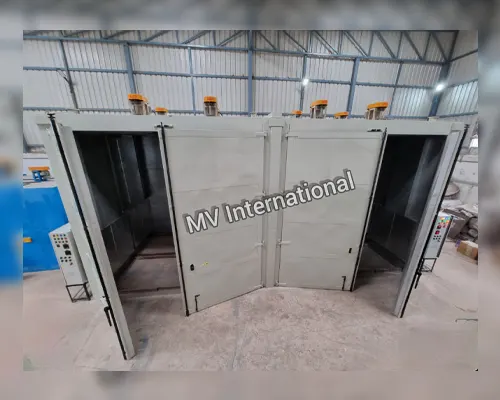
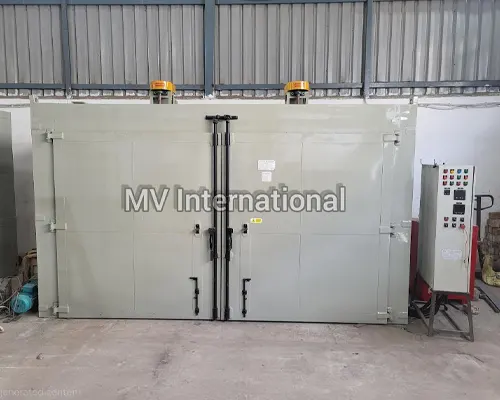
A polyurethane curing oven provides controlled heat to complete chemical bonding in polyurethane coatings and parts. The oven maintains stable temperatures and airflow so coatings cure evenly across surfaces. In production settings, this supports consistent hardness, adhesion, and surface finish. Industries using coated panels, automotive parts, electrical enclosures, and molded components rely on this process to meet repeatable quality standards. MV International designs systems that align curing profiles with material behavior and line speed, without forcing changes to existing workflows.
Temperature control depends on uniform heat distribution and balanced air movement inside the chamber. Sensors track internal conditions, while circulation systems prevent hot or cold zones. A polyurethane curing oven is often built with adjustable zones to suit different coating thicknesses and substrates.
This level of control helps avoid surface defects and uneven curing during continuous operation.
Production scale determines oven format and integration. The polyurethane curing oven can be matched to batch or continuous processes. Typical configurations include:
Each option supports different loading methods, dwell times, and floor space limits.
Regular inspection of burners, heaters, and insulation protects long-term performance. A polyurethane curing oven must also align with workplace safety norms and local emission rules. Access panels, clear documentation, and reliable controls reduce downtime during servicing. Many buyers also review energy consumption data during planning, as operating costs influence lifecycle decisions. MV International supports this evaluation with practical system documentation and technical discussions.
If you are reviewing curing requirements or planning a line update, the team at MV International welcomes a direct, technical conversation. Decisions tend to become clearer when discussed with people who work with these systems daily.
What temperature range does a polyurethane curing oven usually operate in for industrial coatings?
Most polyurethane curing ovens operate between 120°C and 200°C, depending on coating chemistry, thickness, and required cure time.
How long does polyurethane curing take inside a curing oven system?
Curing time typically ranges from 20 to 60 minutes, based on temperature settings, airflow design, and specific polyurethane formulation.
Is a conveyor polyurethane curing oven better for high volume production lines?
Conveyor ovens suit continuous production, offering consistent dwell time, stable temperatures, and easier integration with automated coating lines.
How energy efficient is a modern polyurethane curing oven design today?
Modern designs use insulated panels, precise controls, and optimized airflow to reduce heat loss and lower overall energy consumption.
What safety standards apply to industrial polyurethane curing oven installations?
Installations usually follow local electrical codes, fire safety norms, ventilation standards, and relevant industrial oven compliance guidelines.
What is a polyurethane curing oven used for?
A polyurethane curing oven is used to complete the chemical bonding process in polyurethane coatings, adhesives, and molded components.
What temperature range does a polyurethane curing oven usually operate in for industrial coatings?
Answer: Most polyurethane curing ovens operate between 120°C and 200°C depending on the coating chemistry and application.
How long does polyurethane curing take inside a curing oven system?
Polyurethane curing typically takes between 20 and 60 minutes depending on temperature and production requirements.
How does a polyurethane curing oven control temperature and airflow?
It uses temperature sensors, controlled heating systems, and balanced air circulation to maintain uniform heat distribution.
Which industries use polyurethane curing ovens?
Automotive manufacturing, electrical equipment production, coated metal fabrication, furniture production, and composite component processing.
Is a conveyor polyurethane curing oven better for high-volume production lines?
Yes. Conveyor curing ovens are ideal for continuous production because they provide consistent dwell times and stable curing temperatures.
What configurations are available for polyurethane curing ovens?
They are available in batch, conveyor, and walk-in configurations.
How energy efficient is a modern polyurethane curing oven design?
Modern designs use high-quality insulation, optimized airflow systems, and precise temperature controls to reduce energy consumption.
What safety standards apply to industrial polyurethane curing oven installations?
They generally comply with electrical regulations, fire safety requirements, ventilation standards, and industrial oven safety guidelines.
Why choose MV International for polyurethane curing ovens?
MV International manufactures customized polyurethane curing ovens with uniform heat distribution, precise temperature control, and energy-efficient designs.
| Size of the working chamber | As per client requirement. |
| Material of construction | Mild Steel, Stainless Steel 304 / 316 or any. |
| Temperature Range | Ambient to 1500C / 2500C / 4000C / 5000C. |
| Air circulation | Vertical, Horizontal or Combination. High Volume and high Velocity Airflow provides twice the air changes compare to ordinary Industrial Ovens. |
| Timer | Digital Pre-Settable with range up to 0 to 999 Minutes / Seconds |
| Paint | Enamel Paint / Epoxy Coating / Powder Coated. |
| Power supply | 230 Volts Single Phase 50Hz / 60Hz 415 Volts 3 Phase 50Hz / 60Hz |
| Heating Elements | Low wattage Incoloy sheathed heating elements / SS Tubular |
| Insulation | Ceramic Wool / Mineral Wool |
| Door Gasket | Fibre Glass Rope (High Temp) / Silicon Gasket. |
| Heavy Duty Shelves / Trays | Made out of angles with wire knitted mesh or perforated sheet suitable for oven internal size will be provided along with the oven. |
| Exhaust Manual or Automatic | Automatic forced exhaust system with fresh air inlet. Manually adjustable damper with fresh air inlet. |
| Heating Media | Electric / Gas / Diesel / Steam / Thermic OIL etc. |
| Temperature Control | PID with or without Profile Setting (Temp Up and Down) can be provided with SSR/ SCR for high accuracy. The programming of PID can vary from 4 to 50 programmes. |
| Temperature Recorder | Microprocessor chip-based paper less, Multi-Stage Temp. Indicator cum Recorder. |
| PLC With HMI | PLC can be provided for automation and integration of whole system, data feeding, process display, and fault indication can be seen in HMI. |
| SCADA System | High quality integration and controlling system from one point can be done with SCADA. |
| Door | A. Door interlocking system will switch off the blower and the heating system if the oven doors are open B. Doors on both ends C. Vertical lift door |
| Fumes Outlet | Forced exhaust blower |
| Windows and lights | A. Viewing window B. Interior lights and Access ports for calibration C. Oven on switch- Illuminated D. Heat on switch- Illuminated |
| Timer and Alarm | A. 24/7 timer B. Audible/visual alarm indicators |
Copyright © 2026 MV International. All Rights Reserved.
